Monday, 1 April 2019

Project 78: America!

During Project 77: Shakespeare! we watched the film West Side Story, and the song America inspired Monica to select it as the week's project (along with the fact her father declared he would never want to live in America!).

We covered American history from the 'discovery' of America by Columbus through to life just before the American civil war. We made use of the traditional American History for Kids on Amazon Prime, and supplemented it with additional videos and discussions that were more challenging to the traditional narrative, e.g., History vs. Christopher Columbus.

It was also nice that, in keeping with the previous week's Shakespeare theme where we had studied The Tempest, there was a TED-Ed  video Why Should You Read Shakespeare's the Tempest? that explored how it could be interpreted from the perspective of colonisation.


We also explored the American narrative through three stories: reading an abridged version of Mark Twain's The Adventures of Huckleberry Finn, and watching the animated films An American Tail and An American Tail: Fievel Goes West. 

Finally they made their own Statue of Liberty crowns and torches from paper plates and toilet rolls.
Three Statues of Liberty
Next week's project: Art and Mondrian.

Sunday, 24 March 2019

Project 77: Shakespeare!

As it was Shakespeare Week, and there were a host of resources available online, we decided to make it the topic of this week's project, looking at three of his plays (a comedy, a tragedy, and a history play): The Tempest; Romeo and Juliet; and Richard III.

For The Tempest we watched CBeebies Presents: The Tempest, Shakespeare Animated Tales: The Tempest, and sung along with the BBC School Radio - KS2 Music: The Tempest. It was good for the children to see how the same story can be portrayed in different ways, while the musical version kept them singing throughout the week.

For Romeo and Juliet we watched Shakespeare Animated Tales: Romeo and Juliet, and watched West Side Story to see how the story continues to be reinterpreted. 

Finally, for Richard III we just watched Shakespeare Animated Tales: Richard III, a video they had previously watched for Project 69: The Tudors.

We also made use of the brilliant Shakespeare Week web site, a great resource with loads of activities. The children did quizzes, made 'fortune tellers', learned about the changing language, and got ideas for craft activities. The only bad thing about the free site is you have to sign up to access the resources (hence we haven't linked to specific pages here!). Despite this terrible web design decision, it's worth signing up.
Elizabethan Portraits
Unsurprisingly, there's a phenomenal amount of Shakespeare resources available online, and we're already looking forward to introducing a few more plays next year!

Next week: America!

Sunday, 17 March 2019

Project 76: More Maps!

Every now and then we have a project that goes wrong from start to finish - it last happened with Project 51: Pond Life, so we were due for another project going wrong.

We'd had a project on maps back at the start of our home education journey (Project 2: All about maps), so it seemed an appropriate time to revisit the topic as there was a maps and orienteering home education workshop at Ferry Meadows. Unfortunately the workshop was cancelled, and as much of the week was to be spent on holiday in the North East, there wasn't much opportunity to come up with other activities. Even the geocache walk we planned had to be cancelled as it started to hail heavily when we were due to go out and there was no time left to reschedule!

Therefore most of the map based activities we did this week were of the worksheet variety from Twinkl, doing a build a busy town cut and paste activity, treasure map design activity,  and a compass directions worksheet.

Build a busy town
We also watched some videos about maps and contour lines, and explored some Ordnance Survey maps of the local area. Finally we insisted on playing a map based board game for our screen-free Sunday.
Scotland Yard Junior
All in all maps turned out to be a bit of a damp squib of a project this time, so we will have to attempt it again in the future.

Next week: Shakespeare!

Tuesday, 12 March 2019

Project 75: Charles Dickens & World Book Day

As Thursday 7th March was World Book Day, we decided to have a project on Charles Dickens (see also Project 24: World Book Day and the Wizard of Oz). 

We read three Dickens stories over the week from the (highly recommended) Usborne Complete Dickens: Great Expectations, Oliver Twist, and Nicholas Nickleby. 

The Usborne Complete Dickens
Each story is abridged to about 40 pages, starting with a colourful illustrated guide to the main characters of the stories. It's very accessible for those not yet ready for the full unabridged versions, and the work of Dickens is filled with memorable characters.

On World Book Day itself we visited the Dickens Museum in London. This is the house where Dickens wrote his first books, and is set up in period style. 
Charles Dickens Museum
Our children enjoy any museum, and they enjoyed exploring the different types of room and objects of the Victorian age. It's not a particularly child-friendly museum however, and it would benefit from the sort of children's activity trail that other museums often have - If there was such a trail/worksheet, we weren't informed about it. 

We also did a number of more general activities around books. We watched the BBC World Book Day Live Lesson, did a Book Bingo activity sheet, and got them to fill in a simple book review worksheet about one of their favourite books. 

Book Bingo includes questions about whether you've read a book meeting a certain criteria, which initiated a lot of discussion and debate - especially when Monica and Solomon couldn't agree on whether or not King Arthur was set in a castle!

For their book reviews Monica picked Mary Poppins and Solomon picked William Again (the latest book that we are reading in the Just William series).

Book reviews for World Book Day
Next week's project: More Maps!

Monday, 4 March 2019

Project 74: Royal Mail

This week's project was selected to coincide with a home education day at the highly rated Postal Museum in London.

It was a fantastic day out. The children loved the interactive play space, enjoyed the underground mail rail train ride, and the KS1 & 2 workshop on engineers was both engaging and age appropriate.
Postal Museum

Monica and Solomon are both insistent that we visit again, and it was probably their favourite non-video game museum. Solomon was even inspired to create his own postal museum in Minecraft!

Solomon's Postal Museum (showing play area and post box exhibit)
We also got the children to write their own letters to their grandparents, address the envelopes, buy stamps from the shop, and post them.
Posting Letters to Grandparents
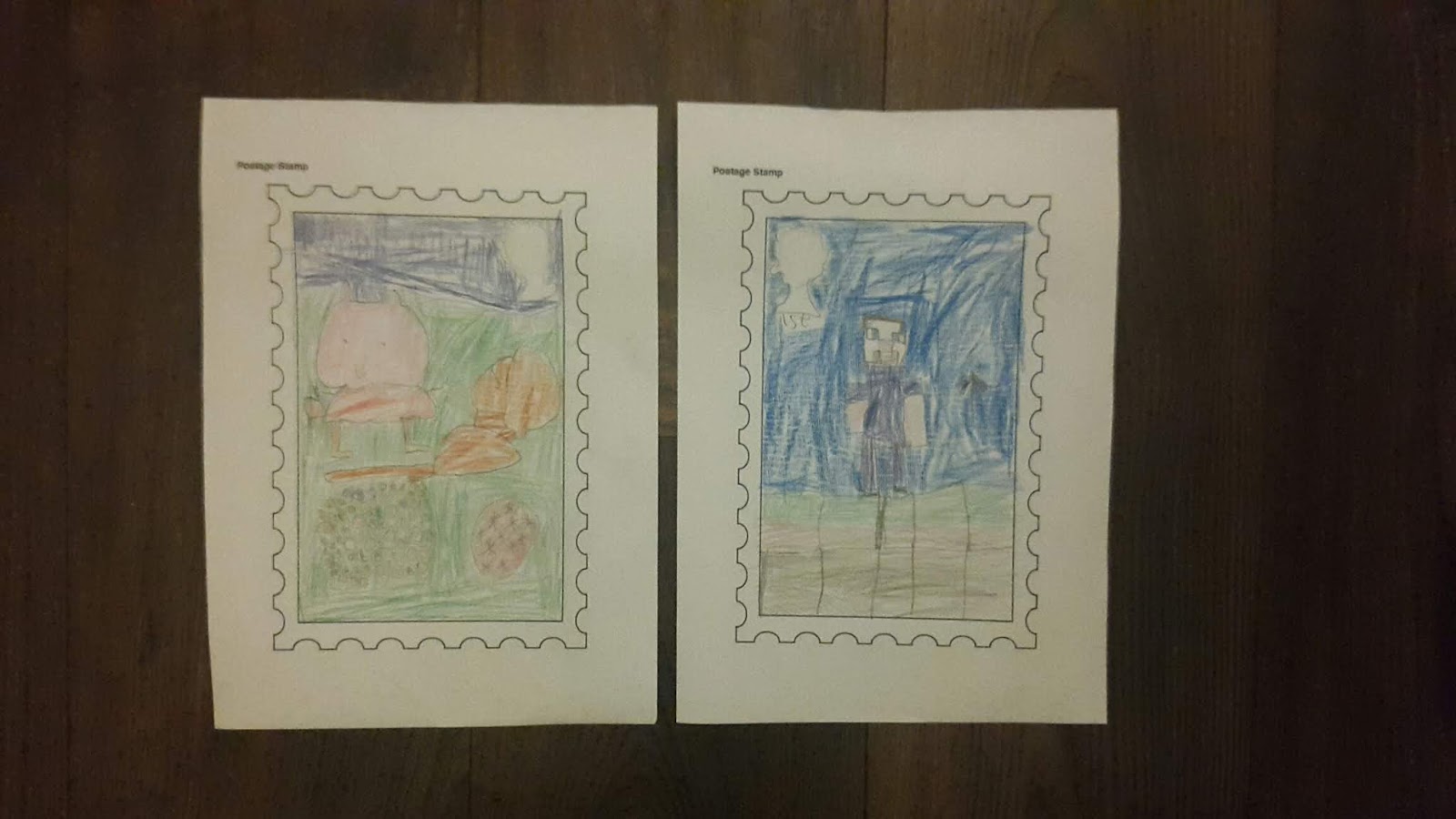
Finally we got the children to design their own stamps.
Peppa Pig and Minecraft Stamps
Next week's project: Charles Dickens (World Book Day).

Sunday, 24 February 2019

Project 73: Moana

School half-terms are inevitably busier than usual, with lots of additional meet-ups, so we decided on a simple project this week: Moana.
The children hadn't watched the Disney film previously, and we knew there was an extensive educator's guide online. We used the educator's guide as a starting point for a discussion about natural wayfinding and ocean currents.

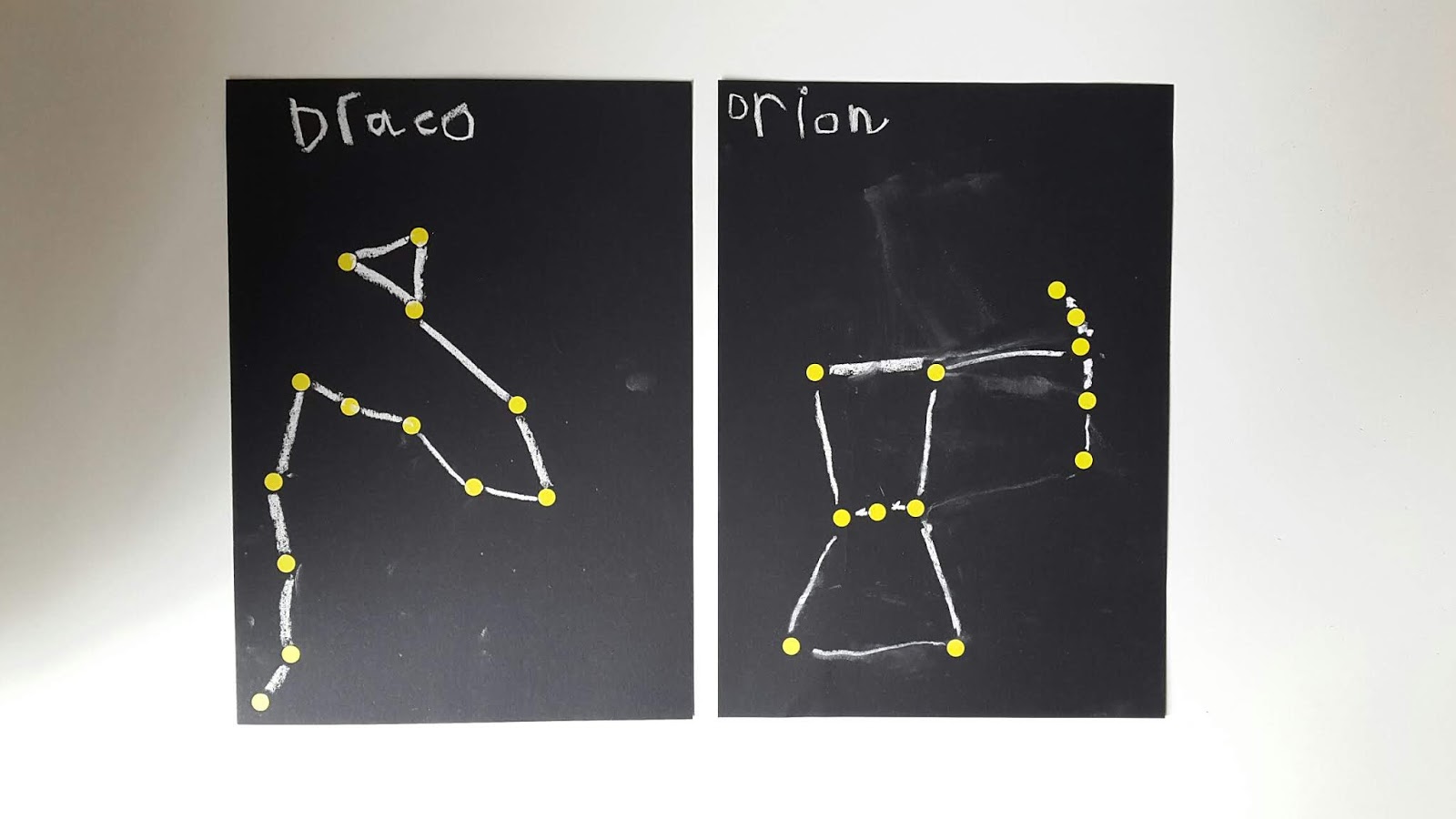
We watched some additional videos about constellations, and the children picked a constellation to copy:
Constellations

We watched videos about Polynesian wayfinding and also wayfinding in the UK, and then went on a nature walk to look for wayfinding signs (unfortunately our home ed budget doesn't run to Polynesian wayfinding trips):
Clues from lichen, grass, and trees
Finally we finished the week by creating our own ocean in a bottle:


Next week's project: Royal Mail

Sunday, 17 February 2019

Project 72: The Climate

This week's project was selected to coincide with a home education group on micro-climates at Ferry Meadows, the local country park (the second home ed group we've been to there this year - see Project 68: Birds of the World). We've covered Project 45:The Weather previously, although  this one looked more closely at differences in climate and the impact of climate change.

The Ferry Meadows workshop was designed to show how different micro-climates can exist in a small geographic area. The children had to measure windspeed, light intensity, air temperate, ground temperature, and canopy cover at 20 metre intervals.
Measuring micro-climates at Ferry Meadows

We also explored the differences between our own area and a Scottish island, using resources on the Royal Geographical Society web site.

Finally we explored the issue of climate change, global warming, and the greenhouse effect with videos from BBC Teach:

 Finally, they also made their own climate change posters:
Climate Change Posters
Next week's project: Moana.