We started the week with a home education workshop at the Puppet Theatre in Norwich. The theme was ancient worlds and Solomon decided to make a puppet of an Egyptian king, which decided the specific ancient world for the rest of the week's project.
It's the second Puppet Theatre workshop Solomon has attended (see also Project 10: Puppets and Theatre), and he's really enjoyed it both times.
Finally, we finished the week with a trip to the British Museum to look at the Rosetta Stone and some actual mummies. We're lucky that the British Museum is only an hour away on the train, but you inevitably spend too much money in the museum shop and Solomon was disappointed that the mummies' bandages weren't generally as distinct as they tend to be in book illustrations.
Some mummies at the British Museum
As can be expected for a civilisation that lasted over 3,000 years - we will have to return to the topic in the future!
Next week's project: World Book Day and the Wizard of Oz
Half-term meant an extremely busy social calendar this week, so we took the opportunity to do some more programming in Scratch rather than a big standalone project.
We continued where we'd left off with in December (Programming in Scratch!) using Usborne's Coding for Beginners using Scratch, and Solomon was soon back up to speed. Particularly nice this week was the fact that Solomon started to create his own sprites (both bitmaps and vector images).
Solomon's Sprites
We plan to use Solomon's interest in computer programming and designing sprites to get him to draw more in the future.
Solomon then wrote, and worked on, his own story for the rest of the week: Solomon, the Desert, and the Librarian.
Version 1 was short and to the point:
Solomon was exploring a desert and found loads of books. He
tries to eat them all. But it takes a long time. And there’s a rock librarian
chasing after him. So he runs away.
Although by Version 4 it had filled out a lot more:
Solomon was exploring a desert and found loads of books. He
was hungry so he tried to eat them all. He ate the first one, and it tasted
good because it was a recipe book with recipes for sweets. He ate a second
book, but it tasted of poo, because it was a book about different types of poo,
so he didn’t like it. He ate a third book, and that was another recipe book for
cakes. He ate it, but it made him poorly because two recipe books in one day are
too much.
But it takes a long time to eat books, and just then Solomon
heard a noise. A rolling noise. It turns out it is a rock librarian chasing
after him. He knows it’s a librarian because the rock has got headphones on
made out of books.
So Solomon runs away and the librarian throws books at him
whilst rolling towards him. One of the books is a blank book, but that’s no use
so Solomon throws it at the rock librarian and it makes him bash into the sand.
One of the books was about feathers, but that was no use because it just
tickled Solomon’s nose. So he threw that back at the librarian. One of the
books was about how to use glue and Solomon caught it. Solomon runs off around
the corner and the librarian keeps rolling forwards the wrong way.
Around the corner there is a little wooden hut. Solomon
munches the glue book to get the information and so makes some glue in the
little wooden hut. Solomon runs back out and pours the glue onto the sand, the
rock librarian rolls into it and gets stuck! The rock librarian can’t roll
anymore and so Solomon grabs more books to eat and runs away.
Books can be very useful, and very tasty, but some taste of
poo.
THE END.
It was an enjoyable project, and Solomon was enthusiastic about returning to the story again and again. We did have to work hard to dissuade him from setting everything in the world of Mario Odyssey and populating it with a host of other computer game characters, but I guess most five year olds have a limited understanding of the intellectual property rights associated with fan fiction!
We followed the Wildlife Trust's instructions on how to make your own birdfeeder, and hung them in the garden to entice the birds in for the RSPB's Big Garden Birdwatch. We watched the garden for an hour and saw a total of one measly pigeon!
Birdfeeder Fat Balls
The second week coincided with BBC's Winterwatch, which was a great way to introduce the children to the variety of wildlife that can be found around the country. We also went on a couple of nature walks in the local area, firstly around Woodston Ponds and then around Ferry Meadows using some of the Nene Park Trust's worksheets. The bird hide was a particularly big hit, especially after the measly returns from the big garden birdwatch.
Woodston Ponds
View from the bird hide at Ferry Meadows
Finally, we finished the project by making the RSPB's food chain mobile of an owl, a mouse, and a nut.
This week's project was split between general science experiments, and a closer look at the elements in particular. The science part resolved around the Horrible Science - Explosive Experiments set, whilst the outcome of the elements section was a poster of Solomon's favourite elements.
Horrible Science - Explosive Experiments
The Horrible Science - Explosive Experiments set contained most of the materials you need for seven experiments, including a volcano, rocket, lava lamp, and super snot. It's a nice sized set, with some fun experiments for children. Most of the experiments you could do without the set, but it's worth the money to save you having to choose experiments, explain the science, and gather materials together - although you will still need to supply a few household items (e.g., vinegar, cornflour and a bicycle pump).
The most impressive of the experiments was undoubtedly the rocket, and the super snot was the damp squib as it never set properly into a goo.
Following on from our first home education project Project 1: History of Computer Games, this week we explored the history of computing more broadly. Exploring how technology has changed from the early mechanical adding aids to the modern digital computers that we have access to today. In addition to the usual books and videos we built some logic gates in Minecraft, visited the Centre for Computing History, and created a micro:bot with a BBC micro:bit.
Like many children his age Solomon loves exploring and building things in Minecraft, so it was an ideal environment to show how from valves and transistors we can now build virtual computers in Minecraft using redstone. Obviously such a task is beyond the scope of a one week project for a five year old, but we did build AND and XOR Minecraft logic gates that could be combined to add up two single digit binary numbers.
Logic gates in Minecraft
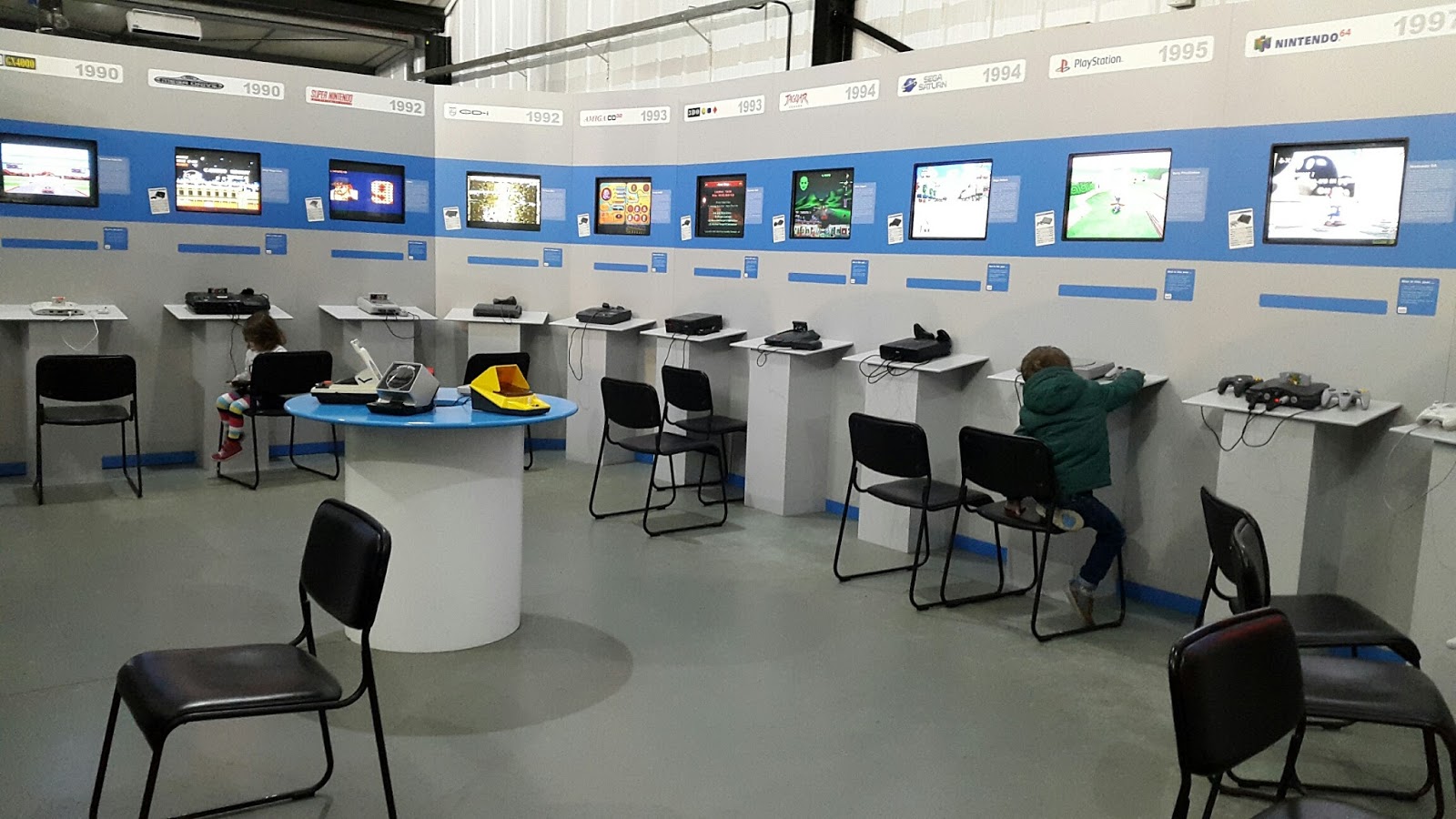
The Centre for Computing History in Cambridge is similar to the National Videogame Arcade in Nottingham, but with additional non-games related exhibitions. Unsurprisingly, however, the children preferred the gaming aspects, in particular Solomon enjoyed the range of classic Sonic and Mario console games available. As we went on a week day in term time we had free run of the place for most of the time. The staff were very helpful and there were some good worksheets. It was a great place for a day out, and we will definitely visit again.
Consoles at the Centre for Computing History
Pixel Art Worksheet
Finally we explored the latest generation of hobby computers by building a micro:bot with a BBC micro:bit, which is supposed to be a bit like a hexbug.
BBC micro:bit micro:bot
It was a nice little project, although there were a few difficulties: Maplins didn't have all the pieces we needed, and the code blocks differed slightly between the instructions and the micro:bit web site. Kitronik however will send out components the same day if you order before 3pm, and we managed to work out which blocks we needed.
For our first project of the year we decided to explore some world records. We looked at the wide range of records people attempt, how records improve over time, the importance of practice, and of course tried some world records ourselves.
We had three copies of the Guinness Book of World Records (1991, 2004, 2018), and it was really interesting to see how the book has changed over the years (as well as the records) with far less information and far more glossy pictures in recent editions.
Athletics in the Guinness Book of World Records
We attempted 6 different records over the week, including one we developed ourselves (to emphasise the importance of developing explicit rules).
3-3-3 Speedstacks
We've had a set of Speedstacks at the back of the cupboard for years, but have never gotten them out for the kids. We timed the 3-3-3 cycle so all three children (including a 2 year old) could attempt the world record.
World Record - 1.363 seconds; Solomon - 8.39 seconds.
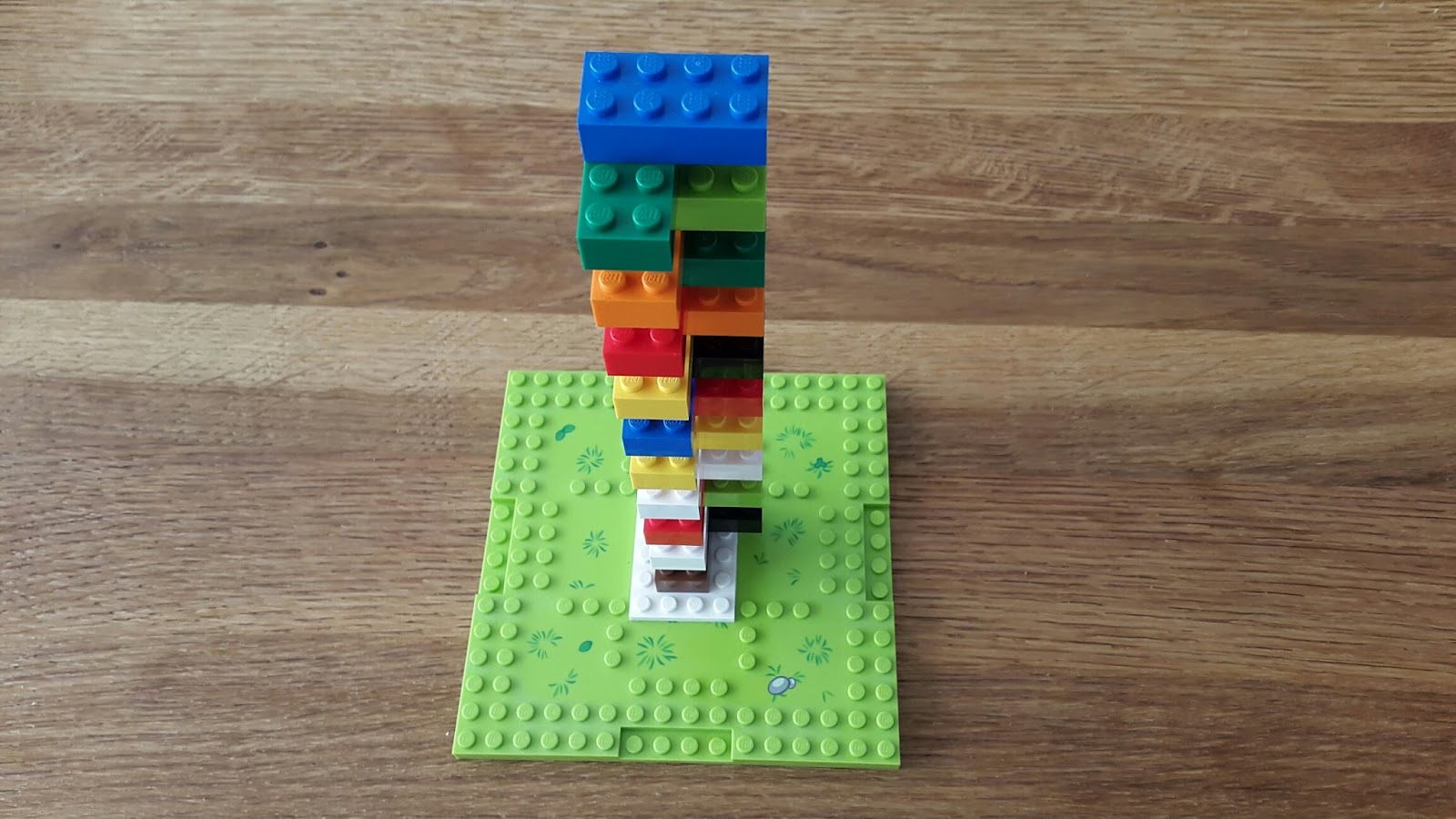
20 Lego Brick Tower
Like most children his age Solomon spends hours playing with Lego, so a Lego world record was a natural one to try:
World Record - 20.75 seconds; Solomon - 55.15 seconds.
20 brick Lego tower
Pairs of Socks sorted in 30 seconds
The world record for sorting socks turned out to be a bit trickier than initially expected - 3 and 5 year olds are not natural ballers of socks!
World Record - 18 pairs; Solomon - 2 pairs.
Socks to be paired
100m Sprint
We couldn't attempt world records without trying one of the best known - the 100m.
World Record - 9.58; Solomon - 37.84 seconds. MarioKart - GCN Yoshi Circuit We also attempted an eGames record. Although Solomon may have been tempted by a Minecraft or Mario Odyssey marathon, we settled on a fastest lap on Mario Kart:
World Record - 39.029 seconds; Solomon - 1 minute 6.811 seconds.
Cuponk - 1 ball, 1 minute, 75cm Finally we developed our own world record using a Cuponk cup and ball (another toy from the back of the cupboard). How many times could the ball be thrown into the cup from 75cm away?
Cuponk
Solomon's World Record - 2 balls.
Solomon's favourite attempt of the week was, unsurprisingly, Mario Kart.