Showing posts with label homeed. Show all posts

Monday, 6 May 2019

Project 83: Music!

This week's project was prompted by the fact that we want to get the new Nintendo Labo VR kit, but first we had to finish the variety kit we already had and the last piece to be made was the piano.

Nintendo Labo Piano
The Labo piano is the biggest of the builds in the variety kit, with an estimated build time of 2.5-3.5 hours, so we spread it over a couple of days. The suggested age range is 6+, and while Solomon (6) kept his focus during the build, Monica (4) had a tendency (understandably) to get a bit bored after an hour. As with the previous Labo builds, they're fiddly to make, but the kids love playing with them:


Similarly, there was a guitar build in the LEGO Boost set that we hadn't made yet, so we decided to build that this week too. 
LEGO Boost  Guitar
In this case, the guitar links to a tablet which plays different chords depending on where you place the capo on the fret board and how you 'strum' the lever. The recommended age range for the LEGO Boost is 7-12, but whereas the Labo requires a lot of supervision, they can work through the Boost on their own. 

Of course we also looked at more traditional music and musical instruments. They watched  brief history of  (Western) music, that provided some nice context to modern music. 


They watched the BBC House of Sound videos about different types of instruments, explored Handel's Zadok the Priest, and learned how to read music

They also played some musical instruments themselves, playing recorders at home, and then the ukulele at the Peterborough Centre for Young Musicians. They really enjoyed the trial session, and we plan for the ukulele lessons to become a more regular thing. 


Next week: The Emergency Services

Sunday, 14 April 2019

Project 80: Plants and Flowers

This week's project was initiated by a home ed group on plants and pollination at Ferry Meadows, the local country park.  Luckily, unlike the last one on maps, this one wasn't cancelled.

At the Ferry Meadows group they learned about the parts of a flower, and had to label them on their own diagram. They then re-enacted the pollination process of bees and flowers outside by transferring water between buckets and putting stickers on each other. Finally they went on a nature walk around the park, identifying plants and flowers and using some to make a flower pressing.
Ferry Meadows Workshop with Solomon 'the Flower'
We planted some seeds of our own in the garden (carrots and parsnips), and put beans in jars with cotton wool to see how they grow, making notes in their 'bean diaries'.
Bean Plants and Diary
Finally they made their own symmetry prints of flowers.
Symmetry flowers
Next week's project: Easter II!  (see also Project 29: Easter and Spring)

Sunday, 24 February 2019

Project 73: Moana

School half-terms are inevitably busier than usual, with lots of additional meet-ups, so we decided on a simple project this week: Moana.
The children hadn't watched the Disney film previously, and we knew there was an extensive educator's guide online. We used the educator's guide as a starting point for a discussion about natural wayfinding and ocean currents.

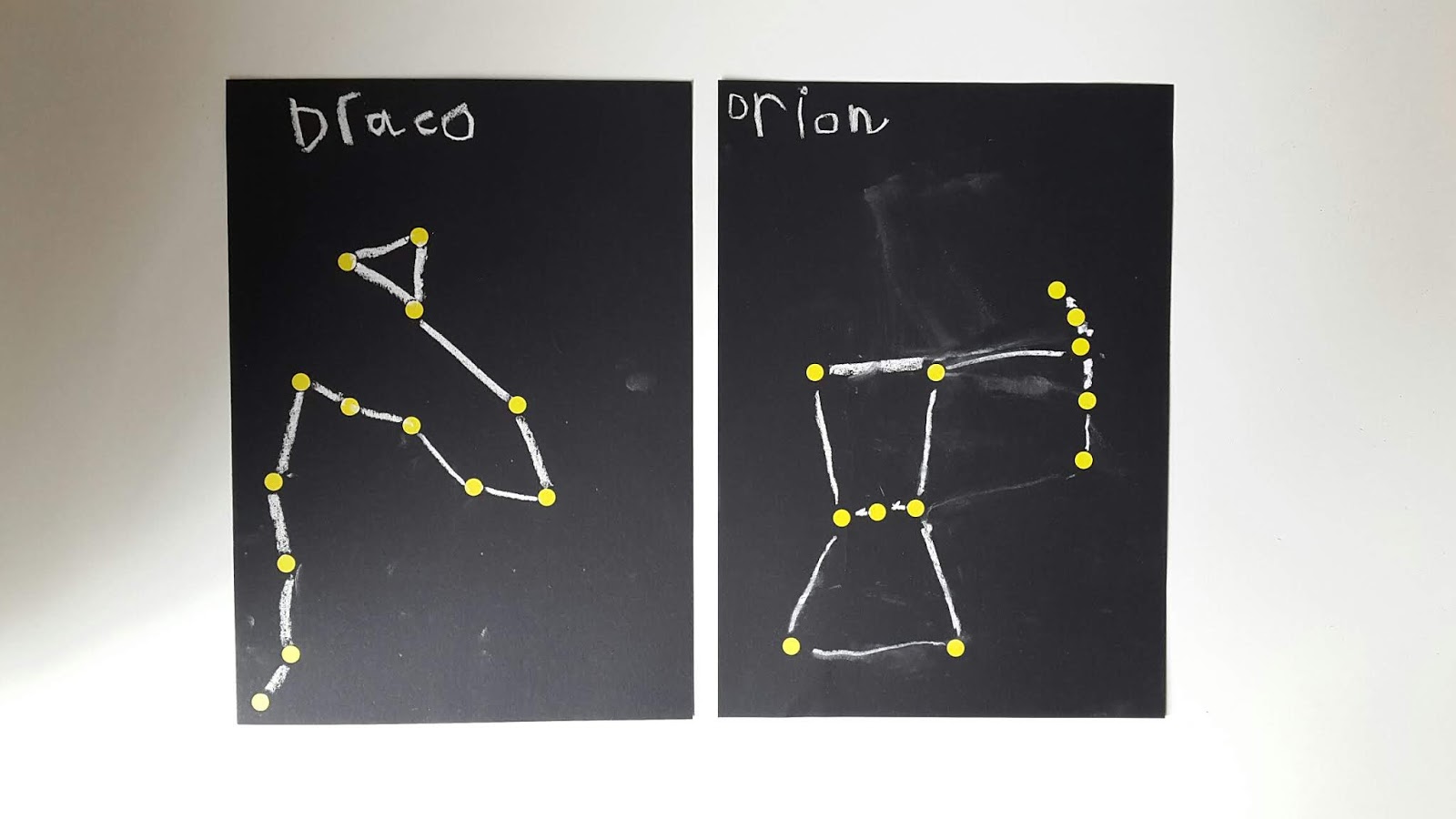
We watched some additional videos about constellations, and the children picked a constellation to copy:
Constellations

We watched videos about Polynesian wayfinding and also wayfinding in the UK, and then went on a nature walk to look for wayfinding signs (unfortunately our home ed budget doesn't run to Polynesian wayfinding trips):
Clues from lichen, grass, and trees
Finally we finished the week by creating our own ocean in a bottle:


Next week's project: Royal Mail

Sunday, 2 September 2018

Reflections on 1 Year of Home Education

It's hard to believe our first year of home education is over. On the one hand, looking back over the blog, we can see how many different things we have done, on the other hand it feels as though time has rushed passed so quickly!

We have enjoyed home education, albeit in an increasingly hostile political environment, and look forward to home educating two children from tomorrow.

Solomon's progress
On the practical level of his reading, writing, and arithmetic, Solomon is undoubtedly progressing well. Although his handwriting isn't astronomically different between the beginning and the end of his first year, he now happily writes much more, more fluently, and without needing as much help with spelling. 

Home Education Diaries
He is now starting his key stage 2 maths workbooks, and loves to read a wide variety of books to himself (especially Beast Quest, Dirty Bertie, Horrid Henry, and 13 Storey Treehouse). The only problem with his reading is that because it's so good, we probably don't read with him as much as we should.

We've enjoyed the project based approach to home education. It gives the week structure, but without being too rigid. Every project inevitably spawns ideas for new projects, so there's always a growing list of projects and topics we want to explore. We'll continue with this approach for the next year. 

Negative views of home education
Whilst we are happy with our home education decisions, it seems as though society increasingly isn't. I'm not sure if it's because we are now home educating that we are more aware of the criticisms of it (i.e., frequency illusion), or if there is a rise in criticisms in response to the rise of home education. Either way it feels as though there are increased calls to clamp down on the current freedom to home educate. 

Hostility to home education is evidenced by the Home Education Bill of the Labour peer Lord Soley and the home education policy of the Liberal Democrats. Lord Soley's bill, currently making its way through the houses of parliament, calls for local authorities to monitor children receiving elective home education, and the Liberal Democrats, a supposedly liberal party, have an increasingly illiberal home education policy:
"9.1.3 We would therefore require that children who are being educated outside a registered school be visited biannually by a representative of the LA to ensure that appropriate education was being given and that such children are being educated in line with the national curriculum entitlement set out above, with a focus on those who have minimal contact with agencies and are at risk of falling through the system."
It is depressing how quickly politicians are willing to intrude into family life, and dictate what and how parents teach their children. Millions of children are currently being failed by underfunded schools which are unfit for the purpose of educating children in a changing world, and yet the state continues to try and impose its failing model on parents who are trying to do the best for their children. 

Education is more than the creation of conformist consumerist cogs, and it is concerning how quickly our freedoms are being thrown away and we move towards a situation where our children belong to the state rather than their family. As an economic socialist what I find particularly depressing is the fact that I will have to rely on the Tories to defend our human rights.

Nonetheless, for now, we will continue to embrace the freedoms we have and argue against those attempts to take them away. 

Our growing class
It's not only the end of our first year of home education, but also the end of home educating just one child. From Monday the blog will become 'Educating Solomon and Monica' as our four year old is now officially of school age.

As a summer child, the idea of putting Monica into a school is even more farcical than it would have been for Solomon. She is a child who seems more likely to be bothered by peer-pressure, and if there is one thing that we've picked up from parents who do have their kids in school, is how quickly the children descend into cliques and some become ostracised. Whilst 'socialization' is increasingly promoted as an important part of school (because the education arguments so often fail), school socialization seems to have more in common with Lord of the Flies than the ideal promoted in the press. 

Monica can already read and write, and is looking forward to starting her official home education. For us there will be the challenge of balancing Solomon's and Monica's interests, and as Monica has already mentioned she wants to do projects on Frozen and 'talking horses' we know we will have to be very selective with her choices!

So , all in all, despite the politicians' best efforts, we've had a good year, and look forward to the next year ahead.

Project 49: Learning how to learn

This was the last week of our first year of home education, so we spent the week looking back over the previous projects as well as exploring how we can help Solomon learn better in the future.

Looking Back
This was the 49th of our projects, so there was plenty to look back on; re-watching videos and repeating some of the activities he liked.

Solomon's favourite five projects (in chronological order) were:
The only one he's looked back on and said he didn't like was:
Obviously you can't celebrate a year of home education without a cake, so we baked a cake and had a celebratory tea with blancmange and chocolate nests. Blancmange because it was mentioned in Roald Dahl's Matilda and Solomon wanted to know what it was, and chocolate nests because we had previously made them for Project 29: Easter and Spring (nb. we did have savoury food too, and it is extremely difficult to find chocolate mini-eggs in August!). 

Cake, blancmange and chocolate nests.

Learning How to Learn
We also started working our way through Learning How to Learn, the popular Coursera course repackaged as a book for 'kids and teens'. 
Learning How to Lean
The book is designed for older children, but seeing how the lessons from Project 6: Nutrition have stuck with him, we really hoped he'd take on board the lessons to help him become a more effective learner. Both his parents have previously done the online course, and liked the practical nature of the advice.

Solomon has undoubtedly enjoyed the subject, and likes the idea of becoming a better learner. Focused and diffused thinking are now part of his everyday vocabulary, he starts each chapter with a picture walk, recognises the potential of the Pomodoro technique for overcoming procrastination and the importance of sleep, exercise and a healthy diet for the growing brain. We highly recommend this for any parent, but especially home educators who will have more opportunity to apply the advice.
Solomon's new Pomodoro timer
Next week's project: Bread!

Sunday, 3 June 2018

Project 37: Metals

We had already got Science-files: Metals from the library, so decided to use that as the basis for this week's project. Using a host of online videos, and A Beginner's Guide to the Periodic Table (previously used in Project 19: Science and chemistry), we explored: the bronze age, iron age, industrial revolution, precious metals, modern alloys, and recycling.

Solomon's reaction to the first video, showing the smelting of copper on an open hilltop in Israel, was that he wanted to do that this week, and was a bit disappointed that we had to say no!


He particularly enjoys BBC Teach: Story of Britain videos, watching the whole series rather than restricting himself to those on the bronze age and iron age.


Hands-on experiments with metals are a bit limited with a 5 yr old, but we did explore the hallmarks on some of the 'precious' objects in our house:
Birmingham palladium and Sheffield platinum
And the magnetic properties of the change in our pockets, and how this has changed along with the composition of UK coins.

Next week's project: The Vikings!

Saturday, 31 March 2018

Project 28: Dinosaurs!

At last we've reached the topic everyone who is home educating young children will do eventually: Dinosaurs! It's a great topic as there are such a wide variety of resources suitable for children of Solomon's age: books, tv series, films, shows, and activities. We used a couple of books, watched Walking with Dinosaurs and Jurassic Park, visited a museum, watched a theatre show about dinosaurs, and Solomon dug a dinosaur out of a lump of  'rock'.

The main book we used was findout! Dinosaurs, part of a series of non-fiction introductory books by Dorling Kindersley. This is a nice quality series with plenty of information, quality illustrations, and an accompanying online web site. The book provides a nice overview of the dinosaur world, types of dinosaur, and the science behind finding out about dinosaurs. As we wanted more information on specific types of dinosaur we came across, we supplemented this with another Dorling Kindersley book: Knowledge Encyclopedia Dinosaur! With so many dinosaurs (as well as pterosaurs and marine reptiles), you inevitably come across ones which aren't in either book, but there's usually one of the same family. 

Walking with Dinosaurs (currently available on Netflix) is almost 20 years old, yet it still managed to keep Solomon glued to his seat throughout. After watching the third episode on marine reptiles we visited Peterborough Museum which has an exhibit of Jurassic marine reptiles:
Jurassic marine reptiles at Peterborough Museum
It was nice to put the local exhibition in context, and we decided against a big trip to the National History Museum as we also had a trip to the theatre planned: Dinosaur World Live
Dinosaur World Live T-Rex
Dinosaur World Live being on at the local theatre is the reason we decided on dinosaurs for this week's project. It's a fantasy puppet show narrated by a girl who was shipwrecked on an island inhabited by dinosaurs, and has brought some of them back. The T-Rex was impressive, and it was nice to be able to go up and touch the dinosaurs at the end, but otherwise we didn't find it to be a particularly exciting show. Hopefully we'll get the opportunity to see Walking with Dinosaurs - the arena spectacular later in the year.  

After the theatre trip we watched Jurassic Park on DVD with all three kids (aged 2, 3, and 5). It's always a bit hit or miss with age ratings from 25 years ago, and we weren't sure whether a PG would still be suitable. They all loved it however, and whilst there was the odd unsuitable word, it was a good sort of scary, probably because a dinosaur park is not the sort of place they usually find themselves in!

Solomon also dug out an Archeofun T-Rex he'd been bought for Christmas, and we'd judiciously put to one side. 
We were surprised at how long the pieces took to dig out, but also how much pleasure Solomon got from it. He probably spent 4 hrs digging the pieces out altogether, and never showed any sign of boredom - even at the end of a mammoth 2 hour session!

Next week's project: Easter and Spring. 

Monday, 26 March 2018

How We Home Educate

Following on from yesterday's post on Why We Home Educate, I decided to write a post on how we home educate, or at least how we home educate at the moment.

We started home education with few preconceived notions about the best way to home educate our children. We broadly adhered to the idea of a child-centred approach to learning, and a fundamental belief in the potential of the vast majority of children to excel academically in the right learning environment, but we had no idea how that would be put into practice on a daily basis. We read Understanding & Using Educational Theories which gave us an overview of all the major theorists, and like many home educators, picked and chose the bits that we thought would best fit in with our children, our circumstances, and our values.

Unlike most home educators, who will tell you "there's no typical day" and "every day is different", we have a broad structure within which the children work. We are a long way from the anarchic unschoolers beloved by the media, we like to give the kids room to express what they want to do, but within boundaries that will help them thrive. All children need plenty of sleep, exercise, and a balanced diet; left to his own devices our eldest would undoubtedly sit on the sofa, day and night, playing computer games.

There are three typical parts of the day, each of which can be moved or dropped according to other commitments such as trips out, home education groups, or other social engagements.

Jobs
'Jobs' is the regular maths and writing Solomon has to do every day, and which he usually starts after breakfast. This consists of writing in his diary what he did the day before, and a couple of pages from his maths workbook. We use the Schofield & Sims workbooks, and Solomon is currently halfway through Times Tables Practice 2. Because we don't enforce a Monday to Friday, 9 to 3 schedule there is an expectation that maths and writing are done every day, and if he doesn't write in his diary one day he has to write two entries the next. On a good day his jobs are done in 40 minutes, on a bad day it stretches out to an hour and a half.

Project
Most days we also try to do something on the week's project, which we describe each week in this blog. Sometimes Solomon will suggest a project, sometimes we will, and sometimes it is prompted by external events (e.g., Christmas, a visit, or a local event). Once a theme has been agreed we come up with a variety of resources and pieces of work to help us explore the topic more fully, this may include trips out, watching a film, a science experiment, or creating a piece of artwork. As Solomon is only five most of the resources and trips are suggested by his parents, but as Solomon gets bigger, and is more aware of the opportunities that are available, we will expect him to suggest more of the activities himself. The main problem we have with the project/theme approach is that there is so much we want to explore that the list of potential projects is always growing faster than we can do them!

Rest time
We've also been lucky in that as our children have grown bigger we have managed to keep the afternoon nap time they had as small children, although over time this has transformed into a rest time. Each afternoon they'll go up to their rooms and (mostly) read quietly for an hour. We've found that on those days they don't have this rest period there is a tendency for them to get a bit overtired, and it raises the chance of there being tears before bedtime. Teach a child to read as early as possible and the parent can have peace and quiet every day!

In addition we ensure there is a trip out for some fresh air each day (we are lucky to have numerous local parks and a nature reserve within 5 minutes walk), there's no computer games until after lunch (and no more than one hour a day!), and TV is generally restricted to a short programme before bed unless it is associated with a particular project. The key with all these things is routine: because computer games are never allowed before lunch and the TV is never 'just on', we are spared the screen time requests that can plague some households.

As the children get bigger we will inevitably have to revisit how we home educate: GCSEs will require greater structure if we are to get through set curricula, and when all three require compulsory full time education we will need to find a balance for the children's different interests. For now, however, we've found a rhythm that works for us, and can't imagine doing it any other way.

Sunday, 25 March 2018

Why We Home Educate

Inspired by a post on The World is Their Classroom, I (Solomon's dad)  thought I would write a post about why we home educate. After all, deciding to home educate is not an easy decision, it is a huge commitment, and whilst it is on the rise, society still expects that your child goes to school. Luckily my wife and I were both in a position to question society's norm and lucky enough to be able to do something about it.

4 is too young!
We did not decide straight away that we would like to home educate our children, rather we have inched towards that position. We started from the position that 4 (the age that most children start school in the UK) is far too young for formal education.

Around the time we had our first child, some Finnish friends of ours also had a child, and the news was continually telling us Finland was an education superpower and British children had to work harder to keep up in the global workplace. But whilst the government promoted increased testing and taking the children away from the bad influence of parents at an ever younger age, this is the exact opposite of our (and Finland's) thinking:
"[no] formal schooling until the age of seven, have short school days, long holidays, relatively little homework and no exams"
It is undoubtedly in the interests of a country's GDP to have parents back to work ASAP and for as long as possible (at least in the short term), but for kids to reach their potential they need emotionally secure foundations, and putting them in overcrowded classrooms for increasingly long hours at such an emotionally vulnerable age is undoubtedly storing up problems for the future.

Once we decided we were interested in home educating, we were pleasantly surprised to discover how easy it is in this country. Literally just do nothing (unless your children are already in school or have special educational needs).

There is no going back (probably)
Once the first step has been taken, and you accept the idea of home education until they are 7 or 8, it is hard to then imagine ever putting them into a school situation. With one-to-one interaction, they can leap ahead with the reading, writing, and arithmetic, freeing up time for them to explore other subjects that they are interested in. School no longer seems to be a place of education opportunities, but a place that restricts a child's education opportunities, where you are praised for conformity and being average.

As our eldest pointed out when we read Matilda, "she's like us": we are a bookish family, shelves filled with books, reading at every opportunity, and it was inevitable that our kids would be interested in books at an early age and we would teach them to read. But if you arrive at reception having read all of Roald Dahl's books, whilst most others are learning their phonics, you will either be bored or be labelled as 'different' - different in a good way by teachers, different in a bad way by fellow pupils. Now, six months of home education later, we find Solomon is leaping ahead with his maths, and unlike reading and writing, those differences are likely to continue to be discernible throughout his education. 

We have the opportunity to home educate
For all our dislike of the schooling system in this country, we nonetheless recognise that most people have little choice, and we are extremely lucky in being able to home educate. Increasingly society (and house prices!) are geared towards two wage families, and people are uneasy about those who don't conform to expected social norms. We are privileged in both being able to afford to home educate, and having little negative reaction to our decision.

We both work from home, and are sufficiently well paid that we both only have to work part time. This means that most of the time both of us are around, and even though there are three children when one-to-one help is required it is available. It also means that there is support and a sharing of project ideas; no single parent is stuck wondering whether we're doing enough with the kids or what we should do next.

We've also been lucky in support from family and friends, or at least they've not been overtly unsupportive. Most home educators have some tale of falling out with family or friends over their decision to home educate, but with the exception of one acquaintance who fell by the wayside this has passed us by. Although our family and friends have little experience of home education they trust us to do what we think is best for our children, even if they wouldn't do it (or have done it) themselves, and with those who have kids in school we don't preach that our way is better. Like most home educators we are asked questions about the socialising side of things, but luckily as we've both got PhDs no one has been brave enough to question our ability on the education side.

In conclusion...six months in...
We've never had cause to question whether we're doing the right thing: The children are thriving, we love it, and our only problem is there's so much to explore and so little time. How anyone has time for school is an absolute mystery to us.